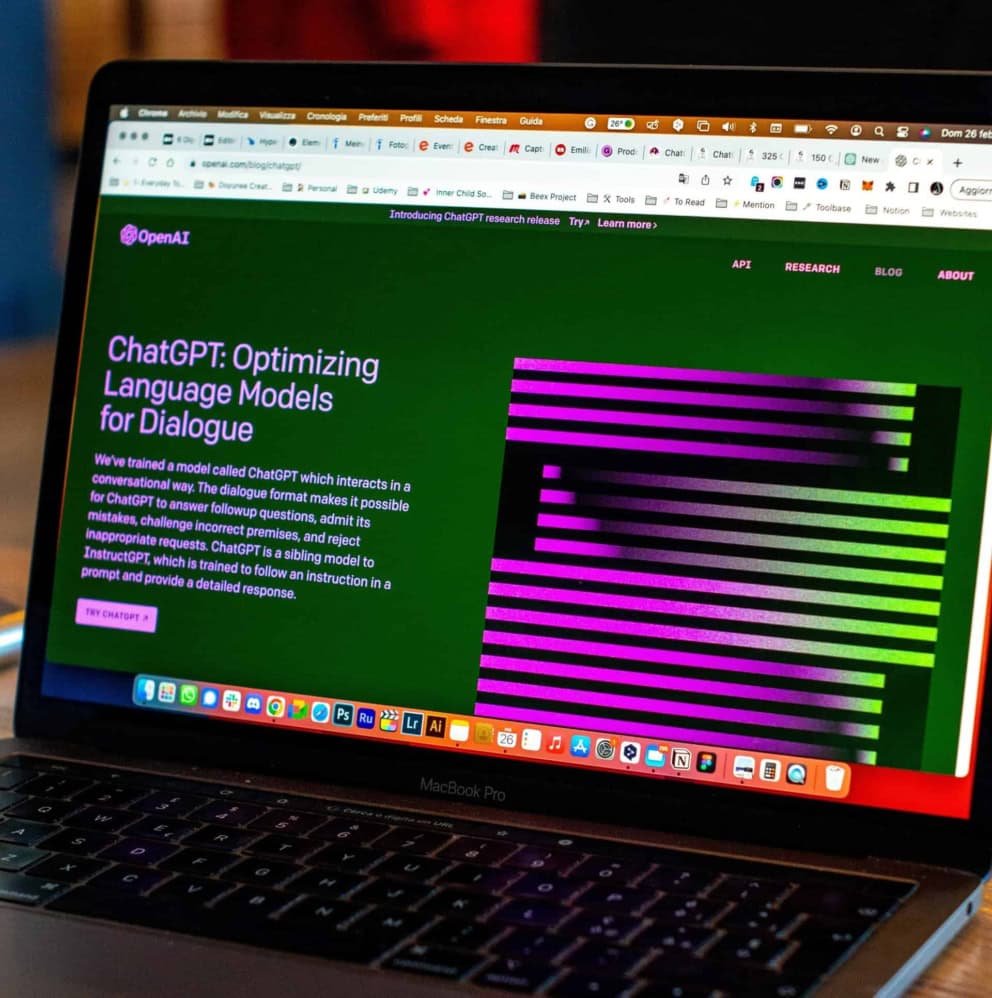
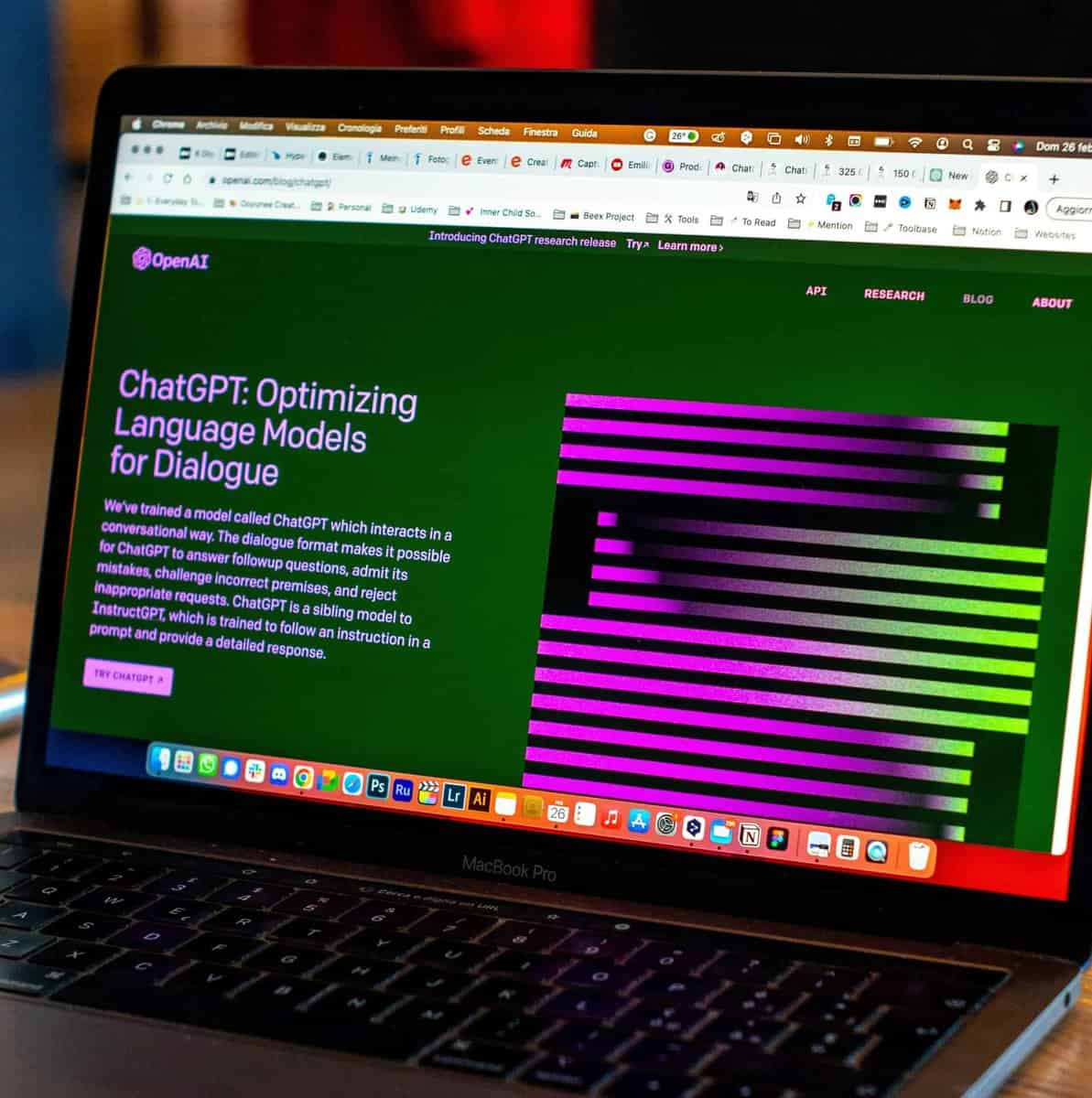
At the Learning Planet Institute, our mission is to help individuals and organizations meet the challenges of our time by harnessing the collective intelligence of humans and machines. When, at the end of 2022, OpenAI launched ChatGPT, We immediately started testing it and assessing the implications for our work.
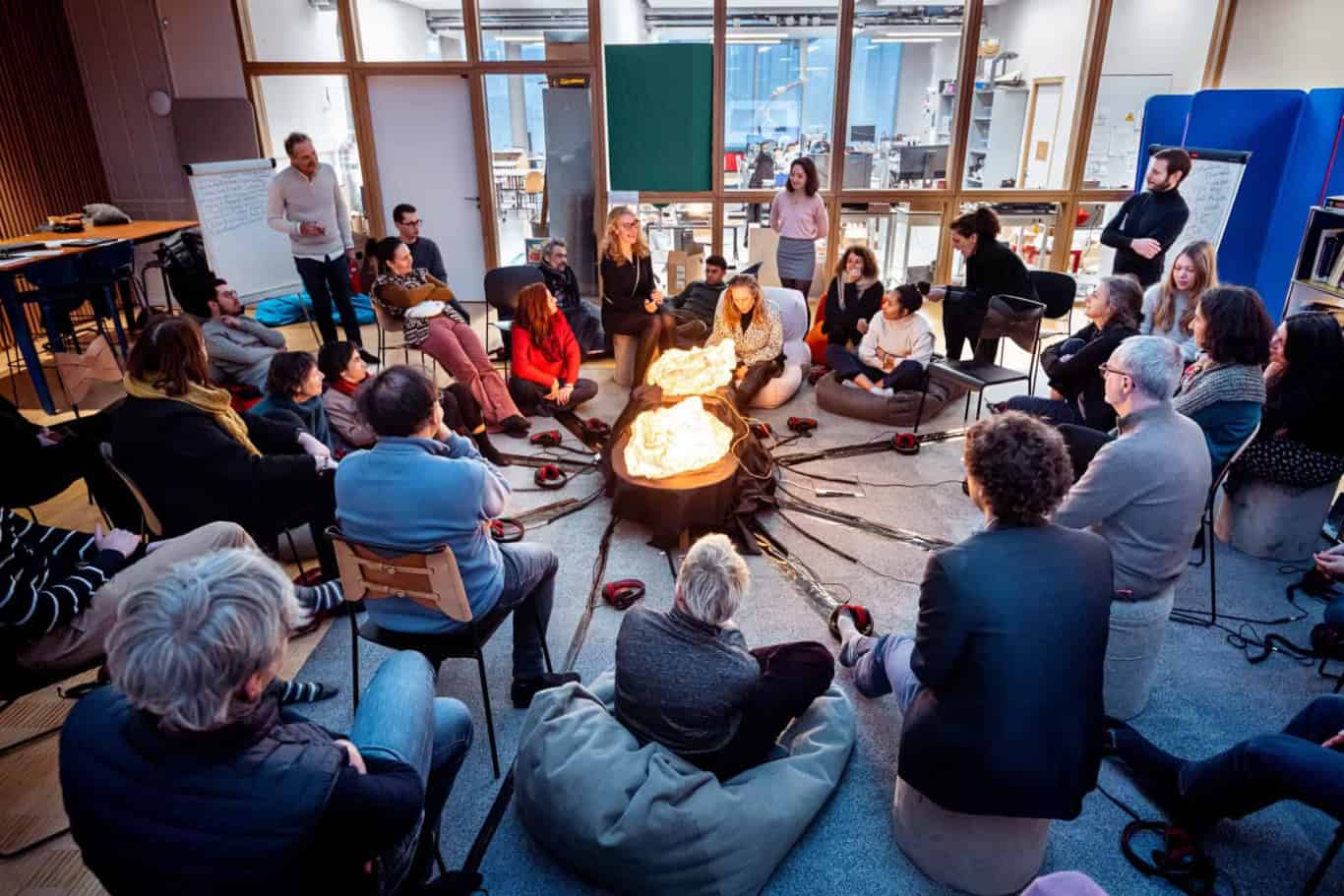
Keen to hear the perspectives of educators and thinkers on the subject, we have organized a panel on the impact of generative AI on education and learning at the LearningPlanet Festival (ed. January 24-27, 2023) with the following speakers Kate Arthur, Tina Götschi and Elie Rotenberg representing primary and secondary education, joined by Yann Le Cunff, representing higher education, and Alistair Croll, an expert in critical thinking. Our conversation explored many aspects and ideas, the essence of which we've captured below, with the help of ChatGPT, curated by Chahab Nastar, who heads the R&D at the Learning Planet Institute, who moderated the panel discussion.
Article translated from the original “Mobilising the intelligence of humans and machines to address the challenges of our time: How will we learn with next-gen AI?“
Chahab: Is generative AI (such as ChatGPT) a transformative technology?
Alistair: Yes, we're seeing two trends: (i) we've shifted user interface work from humans to machines. We no longer need to speak to the computer in its language, it speaks ours. (ii) The content available for learning is no longer scarce, it is abundant. These two trends are transformative tectonic shifts that are the distribution and democratization of the information on which it is trained, and the ease with which information can be accessed.
Elie: With the ability to feed a linguistic model from the entire internet, text generation models can now be used for a wide range of tasks, from poetry to law to code. Generative AI has made access to information easier, but it doesn't guarantee accuracy. It's important that people learn to use and benefit from it in transformative ways.
Yann: The increasing use of generative AI is redefining the skills required in society, as it offers new opportunities for outsourcing tasks. However, this raises questions about what is lost when we rely on AI instead of learning these skills ourselves, and whether we should still be teaching skills that can be easily outsourced to AI. The use of generative AI opens up new possibilities, but also creates new challenges and questions.
Kate: The use of AI in education is a transformative development, but it's important to remember that four billion people don't have access to the internet. The transformative potential of AI in education highlights the need to reflect on what has happened in the past and learn from mistakes made so that no one is left behind.
Tina: This technology has the potential to revolutionize education and could have a greater impact than COVID-19.
Chahab: This reminds me of a quote by Thomas Edison from 1913: « Our school system will be completely transformed over the next ten years ». Let's hope it's true this time! What do you think of the impact of generative AI on education systems?
Elie: When we presented ChatGPT to teachers, we saw three reactions: some thought it was unimportant, some thought it was great, and some hated it. It's important to learn how AI and computer science work, because these fields will have an impact on virtually every sector and profession. Generative AI can also be a great tool for teaching and learning, adapting to a learner's unique profile and serving as assistive technology for children with learning difficulties. People will eventually accept and adopt this technology.
Alistair: Today's economy is based on attention, but as generative AI can summarize and take into account information, we're moving towards an action economy in which people will be tested on their ability to produce results based on a summary of information. The future of education lies in simulation, testing and production. We need to understand information in order to act on it, and the economy will focus on people capable of acting on the information they have been given.
Chahab: I wonder if you've heard of the Gell-Mann amnesia effect. Imagine you open the newspaper and read an article on a subject you know well; you read the article and find that the journalist has absolutely no understanding of the facts or issues; you then turn the page and read the rest of the paper as if it were somehow more accurate. Today's ChatGPT is a bit like that, which leads me to ask: what do you think of the pitfalls of generative AI in learning and education?
Yann: One of the pitfalls is the temptation to replace teachers with generative AI. We know that people come to university not only for the subject matter, but also for the interactions and for what teachers can bring to the table beyond teaching. One of the pitfalls would therefore be to neglect these added values. In other words, the challenge is to focus more on this added value, given that some of the work of content production can be entrusted to AI.
Alistair: Winograd's dilemma highlights the difference between human and machine understanding of language. ChatGPT passed this test with flying colors, which is really impressive.
I'm concerned about the business model surrounding AI-generated content, particularly the lack of a clear way to monetize it. This could lead to a divide between paid and free versions of AI-generated content, and a societal divide between those who can access better quality paid information and those who can't.
Elie: I'd like to talk about the problem of generative AI and how it can produce nonsensical results with the same authority as when it produces genuine results. This problem can be overcome by using generative AI as a «first draft generator". crappy »I'm talking about my own experience of using generative AI to create a teacher's manual on mental health. I'm talking about my own experience of using generative AI to create a teacher's manual on mental health: generating a first iteration using the tool, then asking experts to revise and correct it. This could be a promising approach.
Chahab: What do you think of the ethical issues involved in generative AI?
Kate: I'm concerned about the ethical implications of artificial intelligence and the need for education on the subject, especially for younger generations. I would like to stress the importance of transparency, accountability, privacy and combating prejudice in the field of artificial intelligence. I am concerned about the lack of government regulation, the use of student data by technology companies and the risk of bias and incomplete information in artificial intelligence systems.
We need to bring science and art together in education to promote critical thinking and reduce dependence on AI tools. I'm also concerned about the possibility that some teachers will lose interest in the subject and leave students without adequate education on the ethics of AI.
Tina: We need to address issues of fairness, privacy and explainability. I worry about a gap between those who use AI and those who don't, and the risk of schools falling behind in teaching these important skills. I think it's essential to empower students to correct technology prejudices and help address the disadvantages some students face.
Chahab: How do you see the way we will learn and teach over the next decade, thanks to AI?
Tina: I'm excited about generative AI and its potential to improve writing and reduce student stress. I intend to teach students to use this tool effectively and will work with colleagues to implement it in my school. I'm surprised by the organizations that have taken a rejectionist stance towards this technology.
Kate: School work isn't very exciting. I think AI chatbots and other technologies could help make education more engaging and creative.
Alistair: The « flipping the classroom »We're moving towards a results economy, where testing and optimization take place in the classroom. We're moving towards a results economy, where testing and optimization take place in the classroom.
Elie: Using chatGPT and similar approaches to reduce the cost of producing high-quality learning materials and make education more accessible to all students offers many possibilities.
Yann: I see language models as an interface between education research and machine learning research, and that's very interesting. They could be used to improve education even in places where there are no teachers, and as an entry point for teaching difficult subjects in schools.
ABOUT US
You can watch the video of the full discussion here. From this conversation and the insights and perspectives of our panelists, it's clear that the transformative potential of generative AI on learning and education is undeniable. That's why this new technology is now something we're experimenting with at the Learning Planet Institute as part of our R&D roadmap.
Stay tuned to our social media channels (Twitter, LinkedIn) to continue hearing about how we are harnessing the intelligence of humans and machines to meet the challenges of our time, and the role generative AI can play in this.
MORE ARTICLES TO READ
- Open source and frugal health innovations for breast cancer prevention and diagnosis in Nepal
- Interdisciplinarity to better understand polarization on social media
- Edna Pezard, research engineer committed to make public spaces safer and more inclusive
This publication is part of the UNESCO Chair in the Science of Learning, established between UNESCO and Université Paris Cité, in partnership with the Learning Planet Institute.
The ideas and opinions expressed in this publication are those of the authors. They do not necessarily represent the views of UNESCO and do not commit the Organization.