After studying engineering in Germany, Maria Luisa Serrano became interested in educational technologies (or EdTech) and followed the AIRE master's program in learning sciences to the’Planet Learning Institute. That's when she joined the HOME student club, whose mission is to share and discuss what students have learned at the Learning Planet Institute in developing countries. Read on to find out what Maria has been up to since her arrival at the Institute.
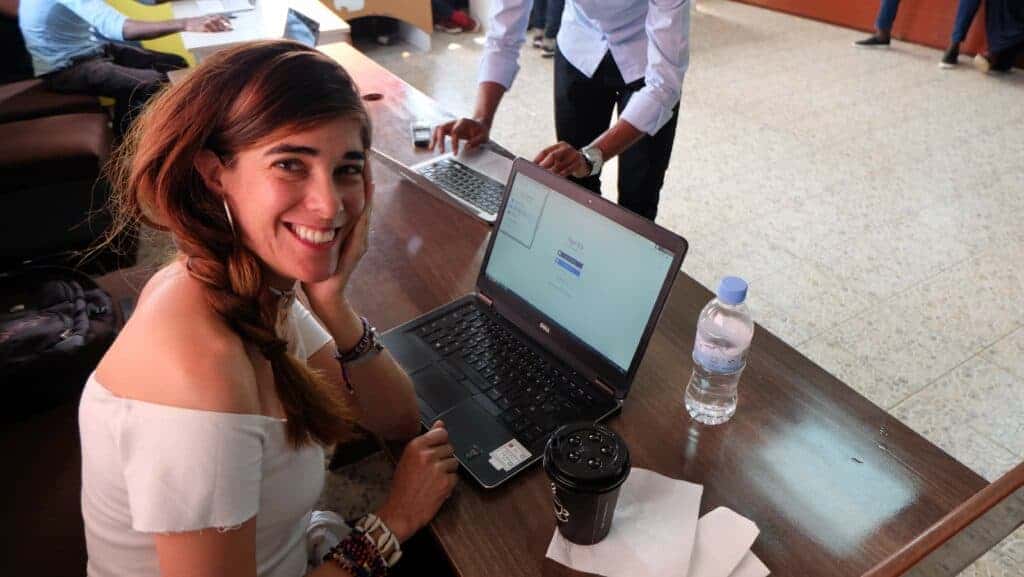
Maria Luisa Serrano happily arrives at the Institut Planète Apprentissage one afternoon at the end of May. She is delighted to return to the institution that welcomed her four years ago. “This place is really great, it brings back good memories.“, she smiles.
Maria Luisa was born in Quito, Ecuador. She studied engineering at the German School in Quito.my father is an engineer“she explains., and in South America, you have to study something “serious“ if you want to find a job.“
So she flew to Germany to study mechanical engineering at the Technical University of Darmstadt. “I had a bit of a culture shock when I arrived from Ecuador. I thought people were very serious. South Americans were cooler and thought a lot about partying.“she explains.
After completing her studies, Maria Luisa worked for Festo Didactic, an EdTech company that uses, among other things, bionic robots for learning. “These are mechanical solutions that allow us to learn from nature. Festo's idea is really to find solutions inspired by nature..”
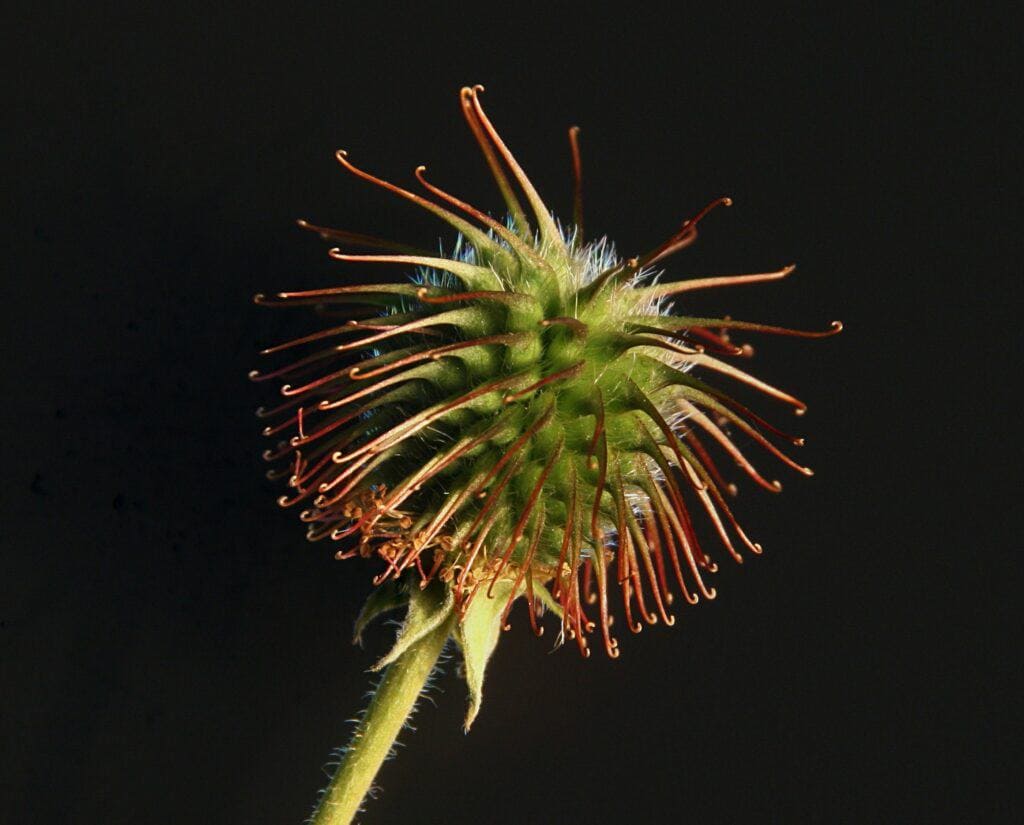
At the time, Maria Luisa's role was that of a coordinator, working to improve technical solutions for education in the various countries for which she was responsible. “I worked mainly for the South American market. I was in contact with ministries of education and industry. We were looking for new development opportunities, new suppliers and new partners to develop our learning robots. C’was a forward-looking effort to transform education“. For Maria Luisa, this made all the more sense given that South America had more shortcomings in this area than some European countries, such as Germany or France.
It was during this first experience that I discovered that technology and education could intersect, and that I wanted to delve deeper into the subject.
After a highly technical career, Maria Luisa wanted to develop her teaching skills. On the Internet, she searched for a degree combining education and technology, and came across the Learning Planet Institute. “I wanted to learn more, to have a better knowledge of the social sciences, macroeconomics... I needed to broaden my field of expertise.”She therefore enrolled directly in the Master 2 in Learning Sciences.
Maria Luisa's arrival in Paris went rather smoothly, despite her preconceived ideas: “I admit I was a bit anxious. I thought it was an expensive, snobbish city, where people were always complaining...”Ultimately, Maria Luisa enjoyed her Parisian life. “I often went to openings, exhibitions and the cinema. I really liked the third places, like Les Grands Voisins, which combine social gatherings, social innovation and cultural events. It's dynamic and there's a lot of community. It wasn't what I expected, and I enjoyed everything Paris had to offer.
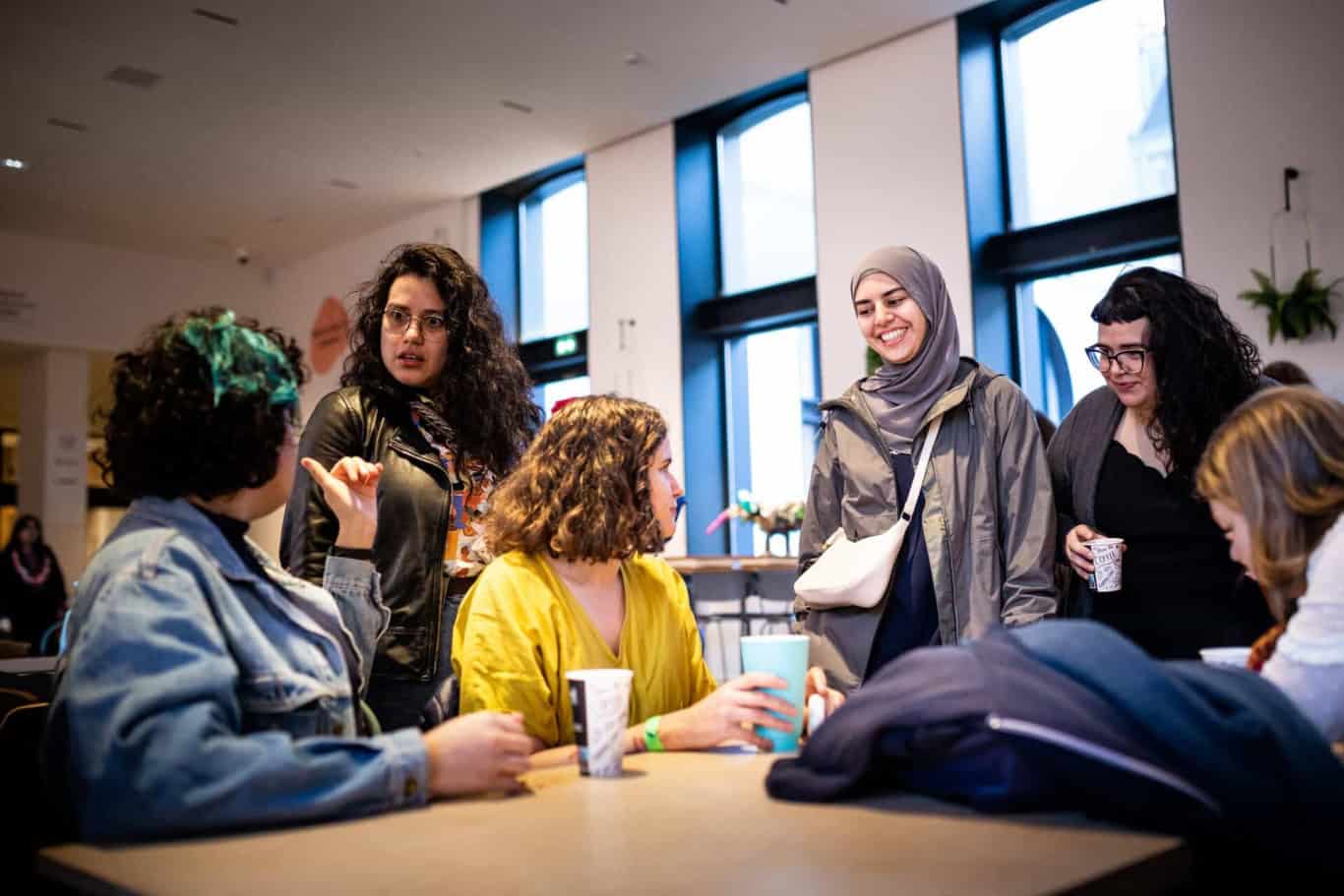
Maria Luisa also made the most of her studies at Institut Planète Apprentissage by forging close ties with the people she met there. “For me, the most interesting thing was the people“ she said with a smirk. “All the participants came from different countries, had different backgrounds and were very open-minded. It was a pleasure to be there
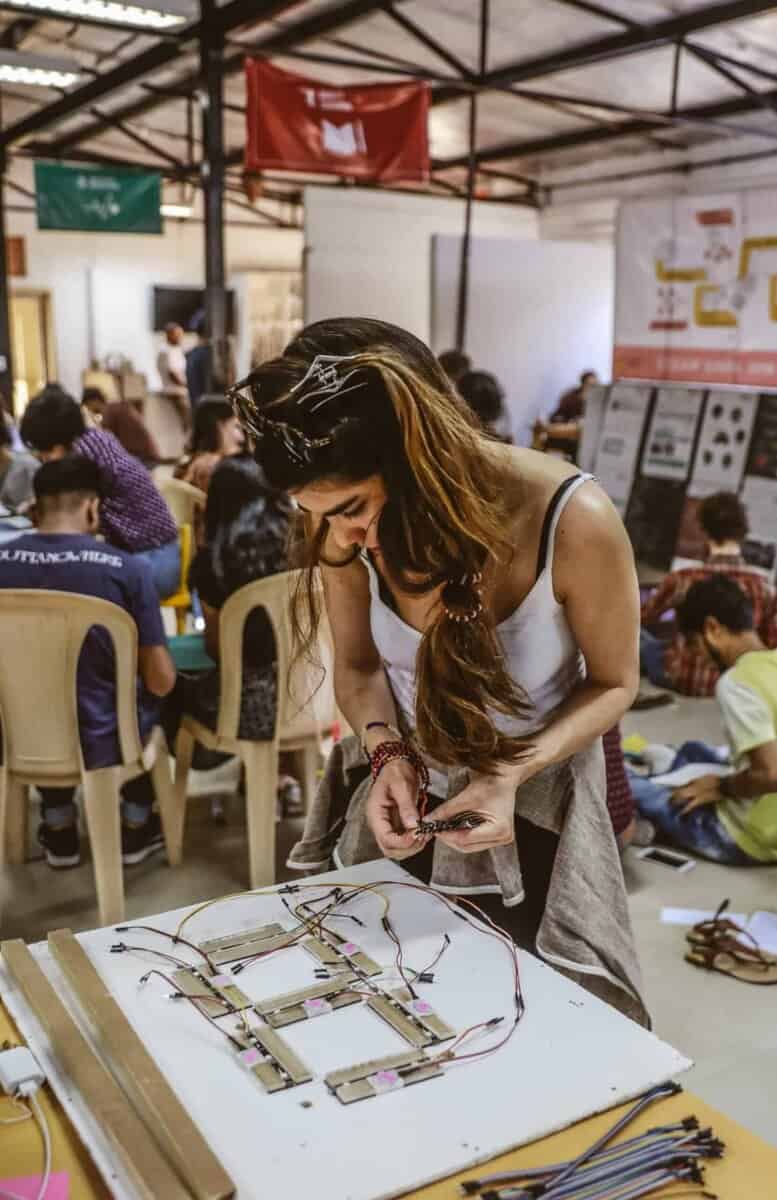
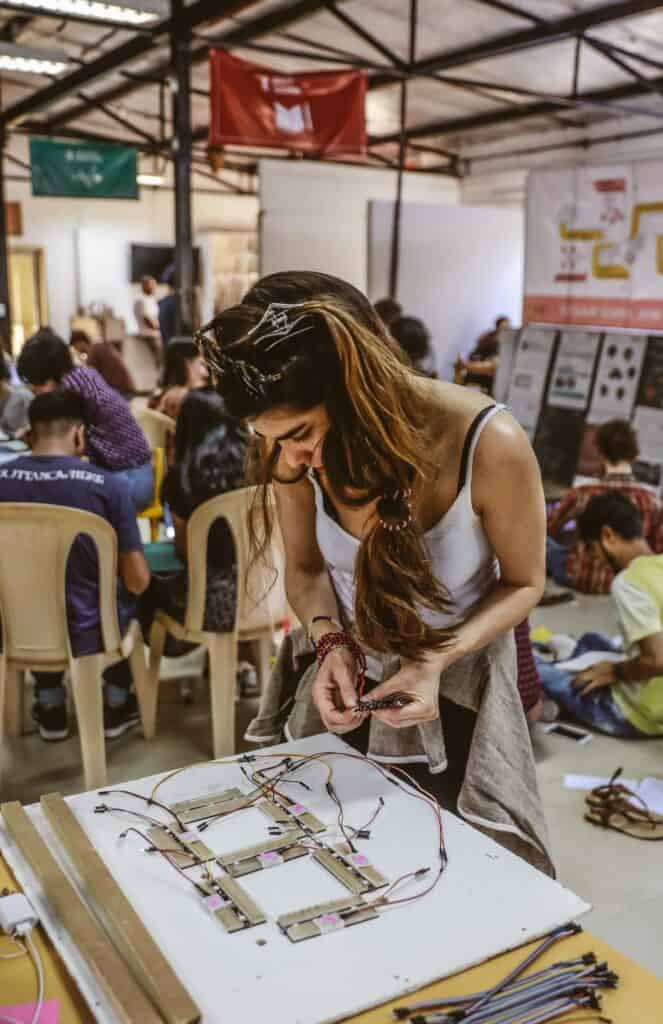
Along with her fellow students, she took part in a number of projects, one of which made a particularly strong impression on her in Mumbai, India: the S.T.E.A.M School, a Franco-Indian program set up by the Learning Planet Institute and the Indian Ministry of Education. Maker's Asylum. “We took part in the S.T.E.A.M School with my friends from the Learning Planet Institute. The idea was for us, young people from all over the world, to develop solutions that meet the United Nations' Sustainable Development Goals (SDGs).”
For three weeks, Maria Luisa and her classmates worked out solutions to achieve the’ODD 4access to quality education for all. “We wanted to design a solution that could be used anywhere, especially in the slums of India. Initially, we built a prototype in the shape of a cube to facilitate learning. We tested it in the slum, but the results were not very convincing. So, with the help of teachers and mentors, we went back to the drawing board and created another prototype.“
Maria Luisa's team then created a board game that could be placed on the floor and on which children had to move to learn mathematics. “This time, we went back to the slums in India and the game worked very well with children aged 6 to 8.. At the end of the trip, Maria Luisa and her team were able to present the prototype to experts from various universities, as well as to UNESCO. “The experience in Mumbai was really incredible. Of course, the Indian slums are a completely different world, but for me coming from Latin America, it wasn't too difficult. We learned a lot in just a few weeks, from design to prototyping to presentation!
Today, Maria Luisa applies the technique of design thinking that ‘She learned all about it in Mumbai at her new job with Festo.
Her experiences encourage her to pass on her knowledge to others. During her time at the Institut Planète Apprentissage, she was also a member of the HOME student club. With three other student facilitators, Albin Salazar, Nefeli Paparisteidi, Nidhi Patel, and a Rwandan colleague, Yves Ininahazwe, she has set up digital education workshops in fablabs in Kigali, Rwanda.
“Albin was in charge of the automation part of the technology with Arduino, Yves was in charge of all digital technology, Nidhi worked on game design, and I taught human-centered design and design thinking.“. At the’University of Kigali, HOME club students work with the K-LAB, the FabLab Rwanda and the GIZ digital center to organize workshops and courses for students over a two-week period.
Our aim was to share and exchange what we had learned at the Planet Learning Institute with people in developing countries, and Rwanda in particular, so that it could be put to practical use, with relatively frugal technologies and the Sustainable Development Goals as our backbone.
The program is going well, even if the workshop organizers have had to revise their initial expectations. “We took some knowledge for granted, and some people didn't really know the difference between technological solutions. So we had to readjust the content of our programs - it wasn't easy, but we learned a lot! The methods, on the other hand, proved effective, and Maria Luisa and her club colleagues explained to students how to create a web page, build a small robot with Arduino, or even an art installation.
The second year, during Covid, HOME club members organize the online workshops. “It was much harder to do everything online, but it worked. We invited speakers from UNESCO, professionals from various sectors and alumni from different countries.
Today, the club HOME has become an association, and the same project will take place in Senegal this year. For Maria Luisa, her two experiences with the University of Kigali have been very enriching:
It's a great satisfaction to be able to share our technical skills, to see people with no experience in the field succeed in using digital tools, develop applications, learn to build prototypes, contribute to the SDGs (Sustainable Development Goals) and be proud of it! I tell myself that this will be useful to them”, she enthuses. “Now we just need to scale up these programs so that they can be applied to as many people as possible, and for that we need the support of universities and institutions.”
After obtaining her Master's degree from the Learning Planet Institute, Maria Luisa worked in EdTech and then e-learning start-ups in Paris. She moved to Spain and is now in charge of innovation projects at the Festo Digital Hub in Barcelona. “I really love what I do. I work on education and gamification of processes rather than products. On a day-to-day basis, I'm the incubator coordinator and I gather all the new ideas. I test these innovations and design them as a minimum viable product (MVP). My experience at the S.T.E.A.M. school and at Learning Planet's HOME institute has been very formative.“
It was there that I learned techniques such as design thinking, which I use every day in my work.
One thing's for sure: Maria Luisa's passion for innovation and the advancement of education has only just begun.
ABOUT S.T.E.A.M. SCHOOL
The S.T.E.A.M. school is a Franco-Indian program born of a collaboration between the Learning Planet Institute and an Indian space called Maker's Asylum. It brings together 100 Indian and French students from different backgrounds in makerspaces. A makerspace is a third-party digital production workshop, an evolution of the hackerspace, open to the public.
ABOUT EDTECH
Technologyeducational (EdTech) refers to the whole range of new technologies that facilitate teaching and learning1. These are educational technologies that enable new content to be learned in a fun, stimulating and innovative way.
Source : Wikipedia : Wikipedia
LEARN MORE
Find out more about the master “Learning sciences”from AIRE
Discover other portraits of members of our community
Find out more about’association HOME
Find out more about the AIRE Master “Learning Sciences
This publication is part of the UNESCO Chair in Learning Sciences, created by UNESCO and Université Paris Cité, in partnership with the Learning Planet Institute. The ideas and opinions expressed in this publication are those of the authors. They do not necessarily represent the views of UNESCO and do not commit the organization.
An original portrait written in French by Marie Ollivier
Thanks to Maria Luisa Serrano for answering our questions!