Recent assessments carried out by the High Council for the Evaluation of Research and Higher Education (Hcéres), which described the five-year Master of AIRE and the’FIRE doctoral school, on the one hand, and the’French National Research Agency (ANR), which analyzed the mid-term results of the creation of the’EURIP graduate school, which brings these two entities together, converge. The singularity and importance of interdisciplinarity, the inclusion of sustainability issues in teaching curricula, the excellence of the research component of courses, innovative learning methods rooted in reality, individualized student support and the internationalization of courses are all highlighted. These are strong points that mark the identity of the Institut, and are the foundation and springboard for our ambition to build a global university.
Interdisciplinarity as a trademark
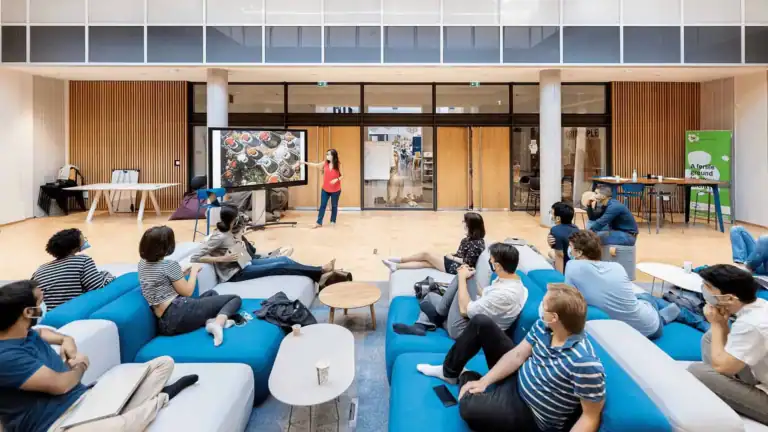
With the Master in Interdisciplinary Approaches to Research and Teaching (AIRE) and’Frontiers of Innovation in Research and Education doctoral school (ED FIRE), the Learning Planet Institute and its university partners - Université Paris Cité (UPCité) for the first and, UPCité and Paris Sciences et Lettres University (PSL) for the second - offer students unprecedented courses that integrate interdisciplinarity into both their aims and content. Thus, in its report, the Hcéres highlights the singularity of the derogatory status of the FIRE ED, which benefits from accreditation for 22 of the 24 specializations in the’European Research Council : «UPCité has an original and remarkable lever for interdisciplinarity. In fact, this doctoral program uses its special status to promote, build and support interdisciplinary thesis topics.»
A strong research base
Another distinctive feature highlighted in the reports is the substantial emphasis placed on training for and through research. Our academic programs devote a total volume of 55% on the Master's side and 300 hours on the Doctoral School side, which is much higher than current regulations. This requirement is embodied in the determination of the Institut's teaching teams to build bridges between the two curricula via l’Paris University School of Interdisciplinary Research (EURIP) : «Joint master's-doctorate activities have been set up to help some AIRE Master's students pursue their theses.» Another noteworthy feature of the Institute is its focus on open science training.
Sustainable issues at the heart of teaching
A strategic challenge for a large number of higher education establishments, teaching sustainable issues is still too rare in the training landscape: «Themes relating to sustainable development and climate and ecological change [...] are poorly represented in Master's courses, with a few exceptions (e.g. Master's degree in Interdisciplinary Approaches to Research and Teaching (AIRE) [...]».» and also «[...] approaches that take into account the challenges of sustainable development, whether in the selection of thesis topics or in the training of doctoral students, are little developed by doctoral programs, apart from a few, those falling within the scope of the FIRE EDs [...]».». By offering courses on sustainability or selecting thesis topics related to sustainable issues, the Learning Planet Institute is acting as a trailblazer.
Creative teaching methods
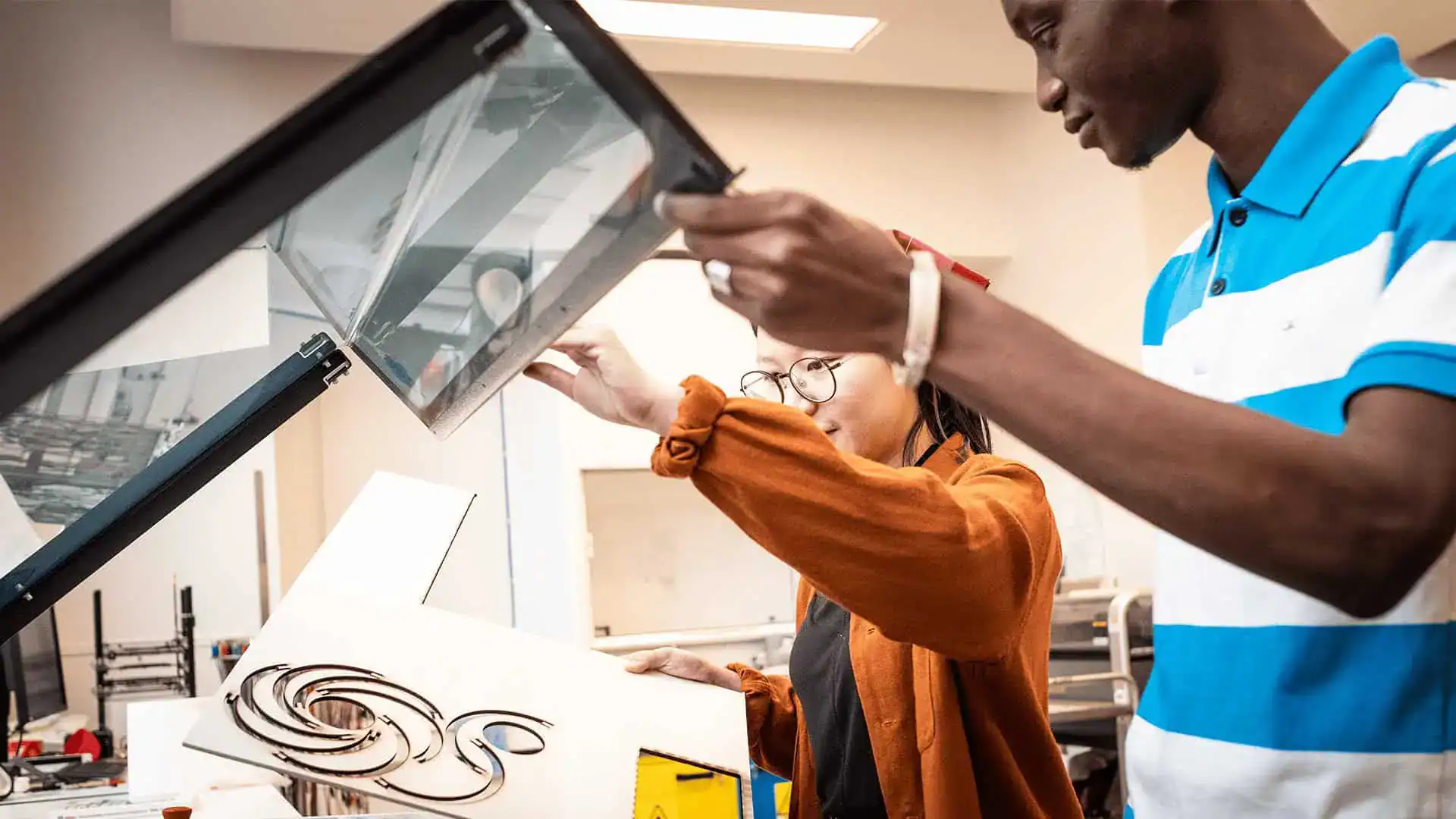
By integrating innovative learning methods - peer learning, project-based learning, research-based learning, tool prototyping and program co-construction - the AIRE Master's program and the FIRE Doctoral School empower students and strengthen their reflective capacity. The report on the Master AIRE states that it «enables students to master concepts in order to translate them into prototype form to foster experimentation in innovation fields (virtual reality, augmented reality, robotics, artificial intelligence (AI), machine learning).», and that «The Institute's environment, with its rooms equipped with videoconferencing and virtual reality systems and its fablab encourages the implementation of individual or group projects based on solving challenges.»
An environment conducive to community development
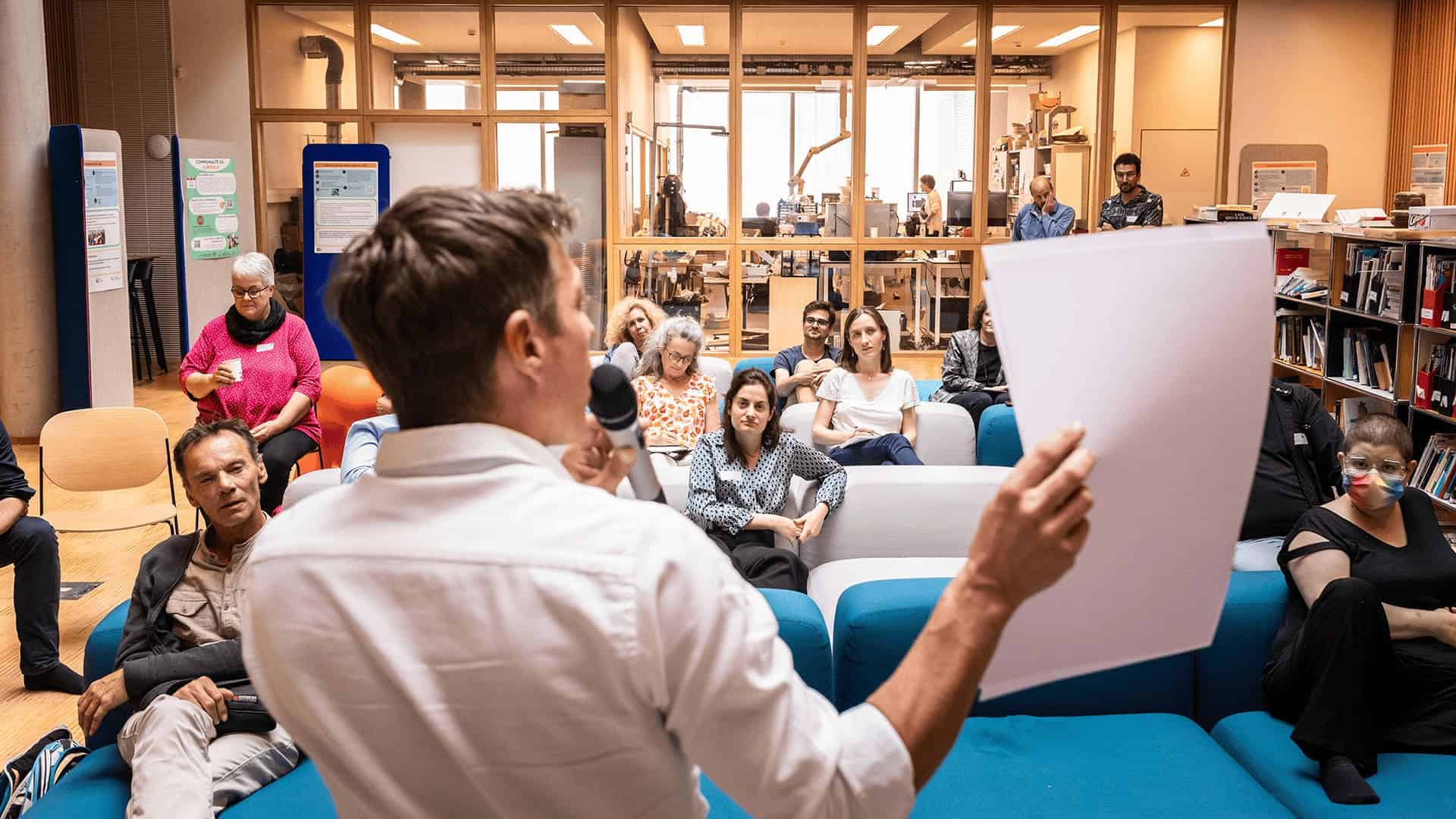
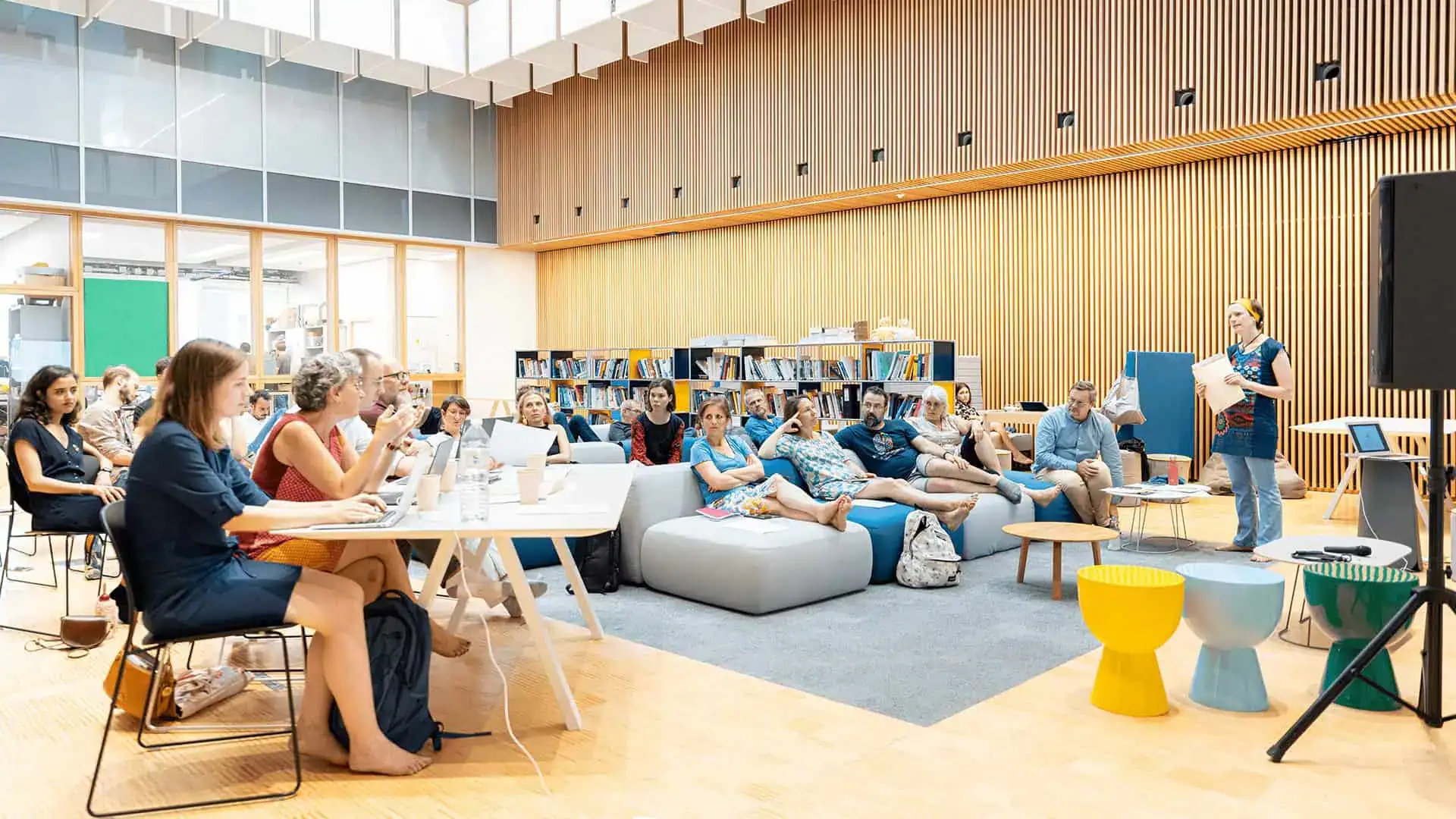
The sustainable campus on rue Charles V, in Paris, provides an ideal setting for exchanges between peers. Hcéres notes that «Some EDs have set up dedicated areas for work, but also for socializing, to encourage the development of social ties between doctoral students (FIRE). [...] Hosting at LPI gives the ED a clear identity and helps create a sense of community, even for PhD students belonging to host teams from diverse backgrounds.»
Individualized, caring support
From application selection to post-graduation follow-up, the Institut's teaching teams support students throughout their career.
The Hcéres expert committee emphasizes «the particular case of ED FIRE, which has set up a very precise, high-quality selection procedure: the ED Board selects the candidates» dossiers for hearings by a college of international experts. These experts propose a ranking and recommendations, and the decision to accept is made by the ED Board. The panel then sends an individual report to each candidate.» They also mention the fact that «Doctoral students are monitored throughout their studies by an individual monitoring committee (CSI) comprising the two thesis directors and two tutors with complementary expertise, to ensure that the research project is truly interdisciplinary.»
On the Master's side, the report emphasizes«the analysis of the professional integration and further studies of its graduates, based on professional integration surveys’.».
Student support is also characterized by the attention paid to the inclusion and well-being of doctoral students in particular: «The doctoral training program has developed a range of support measures to accommodate the diversity of doctoral candidates. Specific measures have been put in place, in particular for the validation of acquired experience (VAE), and to accommodate PhD students with disabilities. Monitoring committees also pay particular attention to the well-being of doctoral students [...]».
An international dimension
Each year, between 7 and 19 students enter the AIRE Master's program. via partnerships with foreign universities, such as Tsinghua University in China, and/or mobility grants (Bettencourt Schueller Foundation, SMARTS-UP, EURIP). Interest in the program is growing: in 2019-2020, foreign students accounted for 58 % of M1 enrolments, 77 % in 2020-2021 and 78 % in 2021-2022. This attractiveness is underpinned by the fact that all courses are taught in English, enabling students to «It enables students to acquire the language skills they need to enter the job market or continue their studies.»
The Hcéres experts made the same finding for ED FIRE, which, «thanks to the Learning Planet Institute, offers a ‘mobility’ grant to all its doctoral students [...] as part of the various programs designed to fund them (IdEx, SMARTS-UP)».» and finance «participation in national or international conferences or a long-term stay in an international laboratory.»
The ED's college of international experts, the management's close links with the European university project Circle U. on the new training methods, as well as the provision of a «international doctoral students for administrative and logistical matters».» are all criteria that contribute to the attractiveness of our two academic courses.
Training rooted in professional reality
Competency-based approach, introduction of portfolios, work-study opportunities, Validation des Acquis de l'Expérience (VAE): the reports show how important it is for the Master AIRE and ED FIRE to prepare students for professional integration and entrepreneurship. For example, the Master offers relatively long internships (21 weeks in M1 and 39 weeks in M2) in research laboratories and companies, or alternating work-study periods, and awards a substantial number of credits. European Credit Transfer and Accumulation System (ECTS) for internships, work-study placements or personal projects (54 credits out of the 120 required to validate a Master's degree) and teaching units linked to entrepreneurship and project management (14 credits).
The Learning Planet Institute's local roots and links with partners from all horizons are also praised: «The AIRE Master's program takes into account the social, economic and cultural needs of the region, as demonstrated by the participation of social and economic players from Paris City Hall on the graduate school's pedagogical board, and the involvement of 37 professionals in the training program, for a total hourly volume of 433 h.» But also : «Doctoral training focuses on enhancing the value of the doctorate from both an academic and a professional perspective. ED FIRE forges strong links with non-university partners, who fund a significant number of doctoral scholarships. The way in which socio-economic needs are taken into account in doctoral training is excellent and can be seen in a number of concrete actions: funding of theses by start-ups, foundations and private companies, the presence of players from the socio-professional world on the doctoral school board, the distribution of job offers by the ED by e-mail or via its social networks, cross-disciplinary training courses, scientific clubs, etc.»
These partnership dynamics are also highlighted in the ANR report on the creation of the EURIP graduate school: «The EURIP program has gained considerable momentum, judging for example by [...] partnerships both in France and abroad, the growing number of mentors in partner institutions who are now part of EURIP. [EURIP also has an entrepreneurship program [...]».»
Equip and support students throughout their academic training so that they can’«they become not the best students in the world, but the best students for the world».» (François Taddei, founder and president of the Learning Planet Institute) is a fundamental challenge for the Institute. The extremely positive results of the Hcéres and ANR evaluations salute the work carried out by our teaching teams over the last few years, confirming our vision and encouraging us to assert that the specific nature of our training courses serves the construction of a sustainable world. Next horizon: the creation of a global university.
Find out more about academic programs :
- EURIP Graduate School
- Master of AIRE - Interdisciplinary Approaches to Research and Teaching
- FIRE Doctoral School - Frontiers of Innovation in Research and Education