On March 28, 2023, UNESCO headquarters in Paris welcomed over 200 members of the Global Coalition for Education (Global Education Coalition (GEC)) for its third anniversary. The GEC brings together a variety of organizations from different sectors, recognized for their experience, resources and expertise, to work together towards quality education for all. Visit Learning Planet Institute is honored to be a member of this coalition, and was keen to put youth at the forefront of this exceptional day.
Interview with Lara Assadourian, Master's student in «Learning Sciences » and Edward Stevenette, Education Project Manager at the Learning Planet Institute.
What role did you and the Learning Planet Institute play in this UNESCO event?
Ed: UNESCO has launched the’International Alliance with the Learning Planet Institute in 2020, a team in which I work as Education Project Manager. The UNESCO teams already knew about us and wanted us to take part in this meeting to make young people's voices heard, and to make the day more interactive.
Lara: In response to UNESCO's desire to get the younger generation more involved, we were present, along with seven students from the Learning Planet Institute, as well as former students.
Can you tell us more about what happened on the day, and who took part?
Lara: Participants included UNESCO teams, business leaders, ministry representatives (such as the Indonesian Minister of Education), foundations and many leaders of education think tanks.
We started the day with a icebreaker which enabled participants to get in touch with each other and reflect on the concept of « Learning Planetizen» (learning citizens of the planet)). Ed presented the concept and the International Alliance (co-founded by the Learning Planet Institute and UNESCO).
Can you tell us what this icebreaker ?
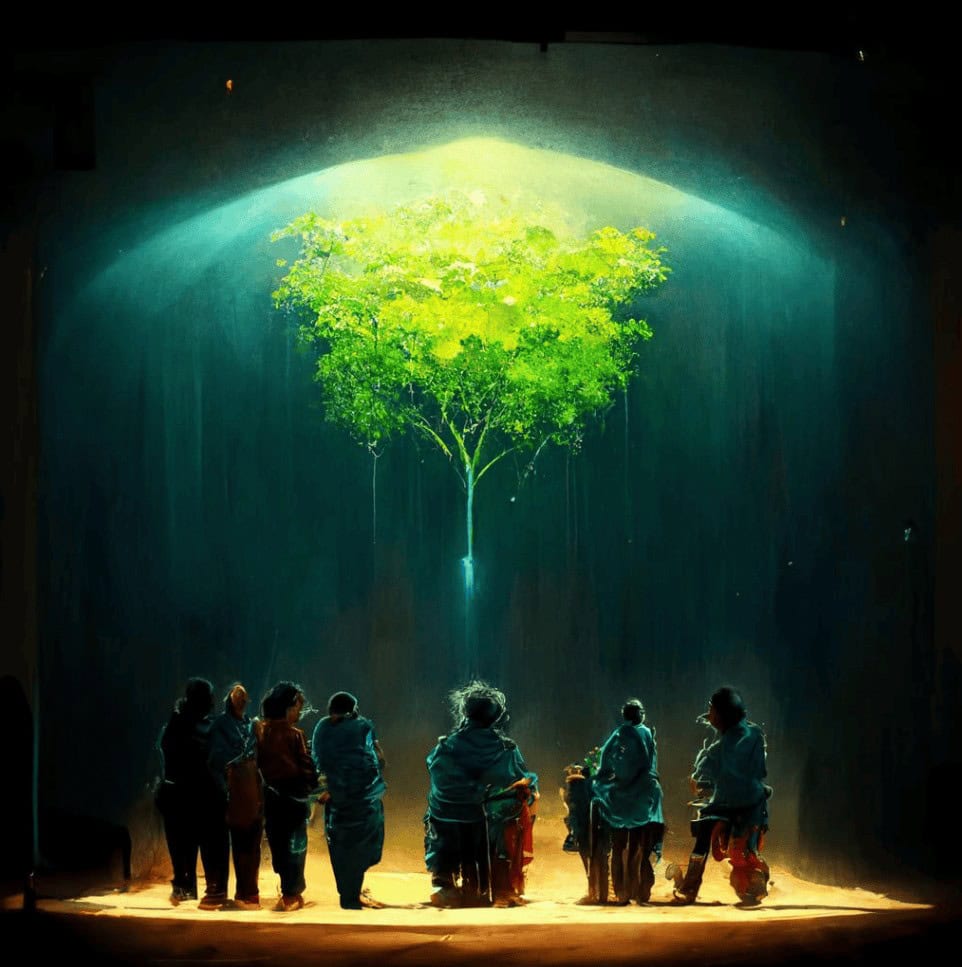
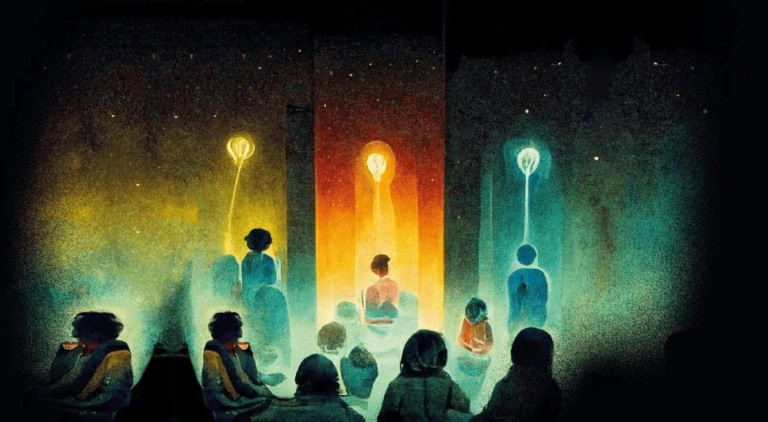
Lara: We have created six cards around the concept of« Planetizenship » (citizenship of the planet), thanks to artificial intelligence. Each card contained a specific image accompanied by a text from the Learning Planet Manifesto (Learning Planet Manifesto). We invited them to share their ideas around the concept of the « Learning Planetizens ».
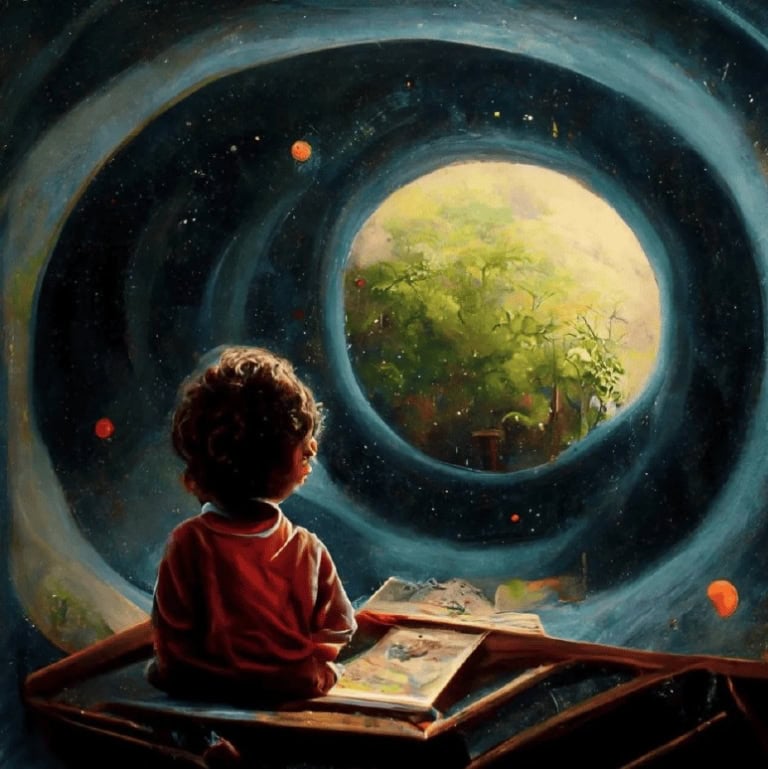
Lara: To the question « What is a Learning Planetizen?», we received responses such as: « someone with empathy », « who shares », « fighting for a sustainable future».», or « who respects the planet, loves people and nature».». As for the question of who inspires them as «.« Learning Planetizen», We've had Malala Yousafzai, Greta Thunberg, Runa Khan and Costa Rica, to name but a few.
Ed: And when asked how each of them strives to be active in their own learning and that of others, some of them replied: « I work in education and help others to develop their skills».», « I'm part of a global learning community».» or « I identify ‘visions’ and see ‘solutions’».».
Lara: Everyone understood that this kind of discussion shouldn't just be limited to this room, but should be held with partners from all communities! The group grew over time: by the end we were 80-90 people strong, and the room was almost full!
The afternoon was devoted to the Global Coalition for Education? Can you tell us more about it?
Lara: The afternoon was devoted more specifically to the projects of the Global Education Coalition (GEC). The first section focused on teacher training, the second on international learning education projects, and the third on the link between digital education and gender. One of the main sessions was devoted to the ’greening« of education (» Greening Education »). This session focused on« Partnership for Green Education» UNESCO (Greening Education Partnership).
Ed: What made the event even more exciting was the presence of young members of Fridays for Future who were truly passionate and committed. It's great to see the next generation of leaders and activists involved in these discussions and initiatives.
What do we mean by« the »greening" of education (greening education) ? And how is UNESCO involved in this process?
Ed: Partnership for Green Education » (Greening Education Partnership (GEP) aims to raise students' awareness of climate change. It is built around 4 pillars: 1) greening schools, 2) greening learning, 3) greening crisis response capacities, and 4) greening communities.
On this day, François Taddei, President of the Learning Planet Institute, took part in the discussions and presented the program. Teachers for the Planet, conducted jointly by the Learning Planet Institute, the Aga Khan Foundation and Teach For All.
Can you tell us a little more about the program? Teachers for the Planet, co-directed by the Learning Planet Institute?
Ed: Of course you can. Teachers for the Planet is a coalition launched in January 2023 that aims to put teachers and education leaders at the heart of the educational response to the climate crisis. Our aim is to bring together diverse initiatives from around the world that can help teachers raise awareness of climate change among their students.
Our main objective is to make the four pillars of the Greening Education Partnership by COP 28. This means mobilizing a global community of over 1,000 climate and education professionals, in at least ten countries, to develop over 100 concrete solutions for teachers and education leaders. Over the next few months, we will be building this community and launching climate education actions.
Can you tell us how you felt about the day and what you learned from it?
Lara: Young people must be invited to these major events. These young people are at the root of the change we need. It was my first time at such an event, and I had the chance to talk to some of the leaders, for example. I have the feeling that everyone has the same ambition: to unite to change things!
Ed: It was very gratifying to make a significant contribution to the day, not least by bringing the voices of young people to the table and infusing interactivity, imagination and creativity into the discussions. The participants and UNESCO were very enthusiastic - and so were we! So we can only go further down this road.
How do you see the future?
Ed: We're just at the beginning of regular interaction between different public and private players in the field of education, but also - and this is more recent - with young people. The idea is to cross-pollinate, to build networks to bring together ideas and practical solutions.
In fact, this is already happening, as many of us are nurturing this initiative with projects in the field. There's a strong symbiosis here, and we now need to think about how to make our work more operational. We're looking forward to working more closely with UNESCO and participating in interactive moments, creative conversations, new narratives and new stories to transform education!
Lara: Art and dreams also play their part in this fascinating conversation!
LEARN MORE
Join the program Teachers for the Planet !
Find out more about UNESCO World Education Coalition
Find out more about UNESCO partnerships for “The Greening of Education”
ABOUT OUR SPEAKERS
Lara Assadourian is currently completing the AIRE master's program.« Learning Sciences » (learning sciences) at the Learning Planet Institute. Through this program, she discovered numerous projects and new concepts, including «Planetizens »She is convinced that we are all Planetizens, citizens of the planet. She is convinced that we are all Planetizens, citizens of the planet, and that by working together, we can truly give the Earth the love it deserves! Today, she is working on a virtual museum project, where she tries to encourage everyone to create art forms.
Edward Stevenette is responsible for developing several of the Learning Planet Circles at the Learning Planet Institute. These circles bring together like-minded members to collaborate and make a greater impact together. Among the circles launched is the « Youth Empowerment Circle »which supports some 200 young prizewinners, and the« Transitions in Higher Education »and « Imagination in the Classroom ». These are spaces dedicated to the construction of a learning planet, supporting the evolution of young players involved in education to set up collaborative projects. Learning Planet Circles are part of the Alliance international - a community of individuals and institutions learning to care for themselves, others and the planet. This alliance was launched by the Learning Planet Institute and UNESCO in 2020.
This publication is part of the UNESCO Chair in Learning Sciences«, established between UNESCO and Université Paris Cité, in partnership with the Learning Planet Institute. The ideas and opinions expressed in this publication are those of the authors. They do not necessarily represent the views of UNESCO and do not commit the Organization.
Interview by Marie Ollivier.
Thanks to Lara and Edward for answering our questions!