Angélica
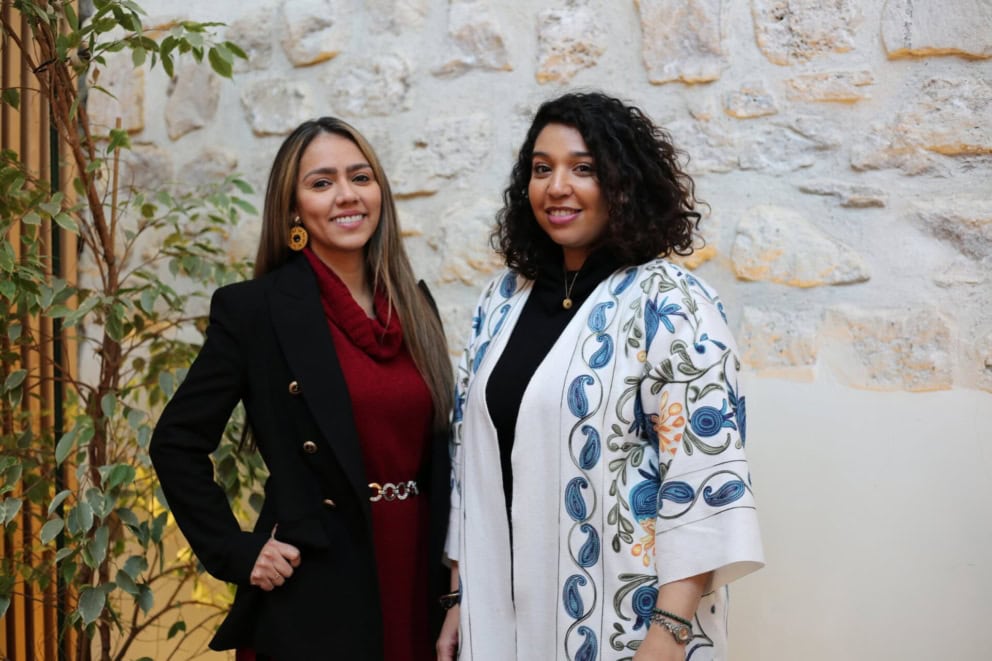
Inès Allag and María Angélica Mejía Cáceres have a common goal: to design new ways of learning and teaching that they can then share with others. Read on to find out all about these two innovators who are designing new paths in education from the offices of the Institut des défis, an organization jointly run by the Institut Planète Apprentissage and Université Paris Cité.
A foreign experience encourages the emergence of new teaching ideas
Inès Allag has spent much of her life traveling from country to country, which has enabled her to observe different teaching styles. After completing her undergraduate studies in France, she was on an exchange program in Turkey when an English teacher, confident in her translation skills - a confidence she didn't share at all - asked her to start teaching the subject. Despite her apprehension, she threw herself into leading a class, embarking on a journey of continuous travel and teaching that took her as far as New Zealand, each time experimenting with different teaching methods, trying her hand at digital education tools and so on.
When she finally returned to France, she taught in the public school system and became aware of the country's very particular educational landscape. This is what prompted her to leave teaching to pursue a degree in educational engineering. “When I was teaching at university, I liked being free to structure my own courses so much that I wanted to make a career out of it. The field of educational engineering makes it possible to do just that”, explains Inès. She graduated in 2022 and joined the’Challenge Institute shortly afterwards.
For María Angélica Mejía Cáceres It was also her experience as a teacher that sparked her interest in educational engineering. ” I'm Colombian and I did my bachelor's and master's degrees in education and science. [biology, chemistry and physics], with a particular focus on environmental education María Angélica went on to earn a PhD in Education, Health and Science in Brazil, hoping to train educators in environmental education, and that's precisely what she did, starting in elementary school before moving on to secondary and university education.
It was while she was a guest researcher in Germany that she first heard about the Institute for Global Learning online. When she was finally able to visit the campus, she felt right at home. ” The Institute's emphasis on environmental education in a very eclectic learning environment appealed to me straight away, she says. María Angélica joined Inès and the rest of the Challenge Institute in February 2024 to lead the organization's education and innovation efforts.
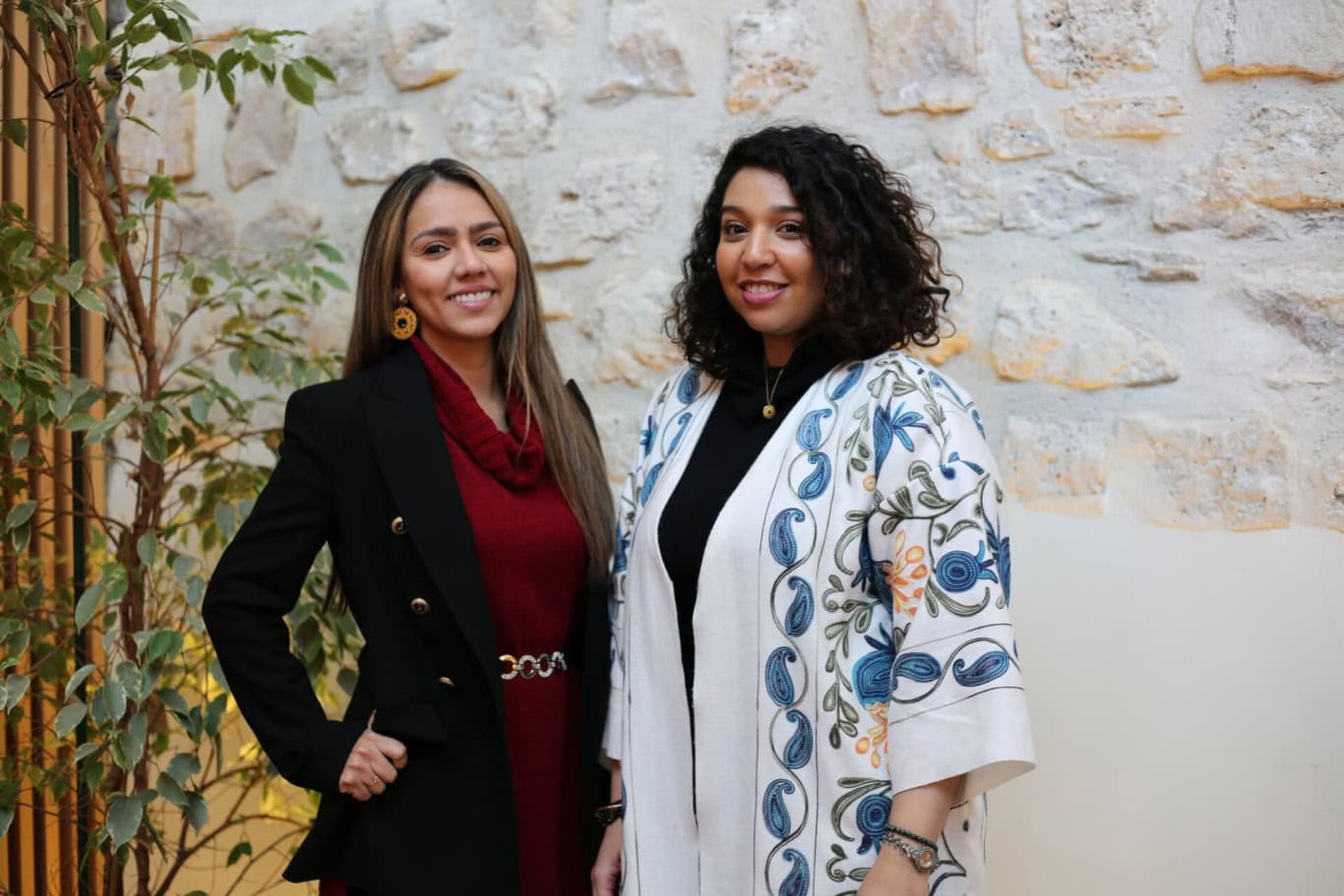
Educational engineering and innovation: two ventricles in the beating heart of the Learning Planet Institute
Inès and María Angélica's interests are so close that you'd think they were destined to work together at the Planet Learning Institute, whose long list of innovative educational programs - from Builders from Possibles to HOP!'s project-based development of inclusive teaching methods, and the way IPL co-designs university degree programs and trains teachers in new collaborative educational approaches - testifies to the value of innovation and retooling in education.
“L‘ducational engineering is the art of designing academic programs to meet students” needs first and foremost".” , explains Inès. “This means carefully selecting the resources that guide the program, the right learning approaches and tools [...] At the same time, we need to design the training of educators, which goes far beyond course content and even touches on areas of logistics and organizational structure. It's program engineering at the meta level”.
For Inès, educational engineering and innovation are two sides of the same coin.innovate” is a bit of a misleading term, as we see many older teaching methods, such as the Socratic method and others, being reintroduced into the classroom”, she says, and María Angélica can only smile when she hears this. María Angélica can't help but smile when she hears this. She couldn't agree more. “What we have in common is that we question traditional methodologies and look for alternatives. For example, we're trying to encourage greater student participation by designing a more collaborative educational environment, promoting project-based learning, finding ways for art to contribute to lessons, and much more.”
The Challenge Institute, a learning laboratory
Inès and María Angélica barely have time to catch their breath at the’Challenge Institute. “Ask us what a typical day at work is like, and we'll tell you it doesn't exist! L’multidisciplinary institute was created in 2020, on the initiative of the’Université Paris Cité and the Institut Planète Apprentissage. Its sole mission is to design new teaching approaches that take social and environmental concerns into account, and to deploy them in schools and in the community. Since its creation, the organization has seen its share of successes, obstacles and failures, but the work of bringing together universities, civil society players and sustainable development partners continues. Since its creation, the institute has developed eight experimental programs in the fields of technology, education, learning and more.
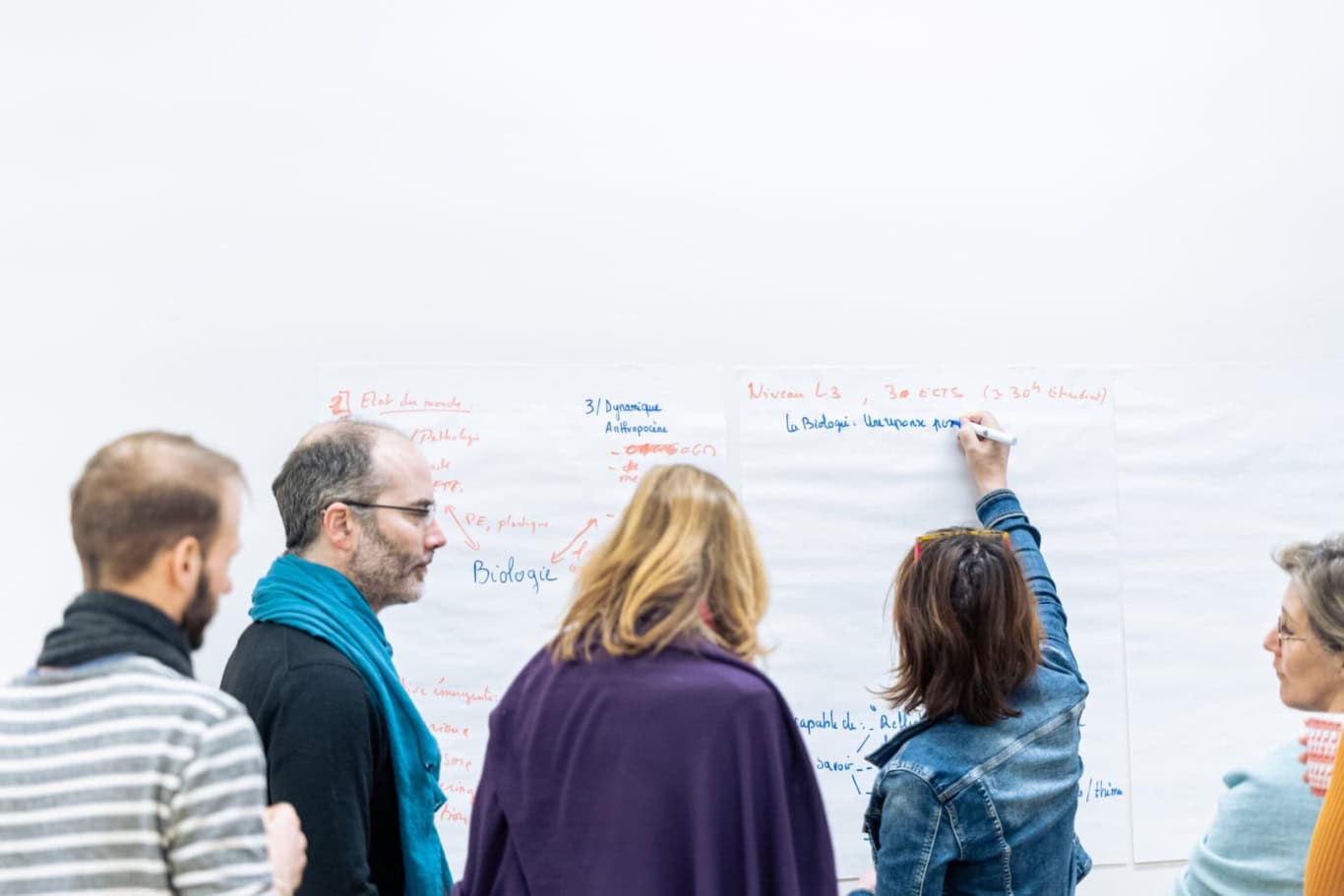
New learning methods: Project-based learning and mentoring programs
Working at the Institut des Défis doesn't mean that María Angélica and Inès are no longer wearing their teaching hats. Both have worked with the Learning Planet Institute's teaching teams and students to design the master AIRE(Approaches to interdisciplinary research and education). “We started with feedback from the students themselves and worked hard to structure a coherent program around their ideas. We try to improve our approach every time we set to work.”, explains María Angélica.
The first year of the Master's program includes a course on sustainability science. “There are 16 different nationalities represented in the student body of the master's program, and we have taken this into account, adapting the teaching of biology and adopting a multicultural attitude to the environment. Project-based learning is at the heart of the course. Students find a specific area of study that they are passionate about and try to find a solution to a problem within that area of study.”
Inès adds : “Engineering and innovation found a strong voice here in that, for this course, I recommended a mentoring component for project-based learning as a necessary bridge to achieve the best results.”
Students earning their Master's degree in AIRE regularly meet with a mentor, but Inès points out that not just anyone can be a mentor. At the Challenge Institute, she has compiled a list of skills that mentors must possess to be eligible. “A good teacher doesn't necessarily make a good mentor. In the field of educational engineering, everything that is generally taken for granted is constantly being questioned. You'd think that someone with a lot of knowledge about a given subject could teach that knowledge, but that's simply not the case. Teaching is a skill that needs to be honed. Our job is to guide mentors and teachers along the way.
Building bridges between educators, from one field to another
Guiding teachers is one thing. Getting them around the table is quite another. ” Universities tend to divide themselves into silos”, explains Inès. “We strive to break down walls and create a space for building bridges between different fields of knowledge, so that teachers can exchange and share experiences in their classrooms.” To keep teachers in touch with each other, the Challenge Institute has set up a working group called PedaGo! who meet regularly to discuss the problems they encounter in the classroom and gather a multitude of different viewpoints. “L’Institut des défis has only planted the seed“adds María Angélica, as PédaGo! has since taken off.
These examples are not exhaustive. More recently, the Institute of Challenges team published its iN&Di guide which details its plan to raise awareness of inclusion and diversity issues across the entire LPI landscape.
A dynamic community reorganizing education
It would be superfluous to say that Inès and María Angélica are passionate about their work. Both are quick to express their gratitude for the opportunity to work in a variety of academic disciplines, while pursuing their continuing education in fields such as marketing, technology, project management, educator training and so on. The freedom to exercise their creativity is also a major reason why they feel fortunate to do the work they do. “Here at the Learning Planet Institute, everyone has the opportunity to be creative and do things their own way, which leads to many wonderful things.
Learn more
Find out more about’Challenge Institute
Find out more about education division of Learning Planet Institute
An article written by Marie Ollivier
Thanks to Inès Allag and María Angélica Mejía Cáceres for answering our questions.