Recent evaluations carried out by the Haut Conseil de l'évaluation de la recherche (French High Council for Research Assessment) and de l'enseignement supérieur (Hcéres), which examined the five-year program for the AIRE master's degree and the FIRE doctoral school, and by the’National Research Agency (ANR), which assessed the mid-term report on the creation of the’EURIP doctoral school combining these two entities, came to converging conclusions. The evaluations highlight the unique interdisciplinary approach of the programs, the integration of sustainability issues into the curricula, the excellence of the research, the innovative and real-world teaching methods, the individualized student support and the internationalized career paths. These strengths define the Institute's identity, and serve as both the foundation and springboard for our ambition to build a global university.
Interdisciplinarity as a signature
The Master's degree in interdisciplinary approaches to research and education (AIRE) and the doctoral school Frontiers of Innovation in Research and Education (FIRE) offer unique programs that integrate interdisciplinarity as a central objective and content component. In partnership with’Université Paris Cité (UPCité) for the Master's program, and with UPCité and the’Université Paris Sciences et Lettres (PSL) for the doctoral school, the Learning Planet Institute offers innovative educational opportunities. The Hcéres report underlines the exceptional status of the FIRE doctoral school, which is accredited in 22 of the 24 specialties. of the European Research CouncilUPCité has an original and remarkable tool for interdisciplinarity. This doctoral program draws on its exceptional status to promote, develop and support interdisciplinary thesis topics.“
Strong integration of research
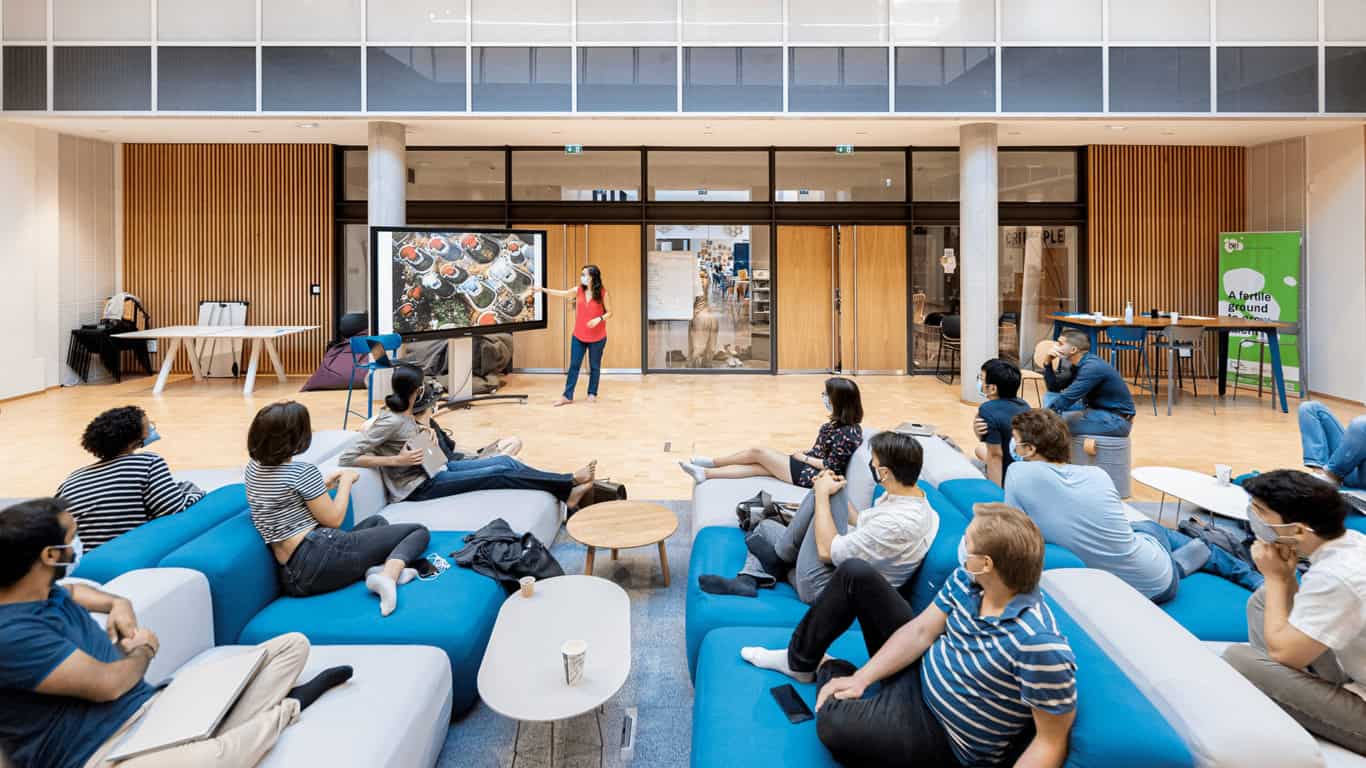
Another key feature highlighted in the reports is the significant role of research-oriented teaching. Academic programs devote 55 % of the total number of hours to the master's level and 300 hours to the doctoral level, far exceeding regulatory requirements. This commitment is reflected in initiatives to bring the two curricula closer together through the’École universitaire de recherche interdisciplinaire de Paris (EURIP): “Joint Master-Doctorate activities make it easier for AIRE Master students to pursue doctoral studies” The Institute also prioritizes open science training as part of its programs.
Integrating sustainability into teaching
Teaching about the challenges of sustainability is still rare in higher education institutions. However, the Learning Planet Institute is a forerunner in this field, integrating sustainable development into its curriculum through courses and thesis topics. As the Hcéres report points out: “Topics related to sustainable development and ecological change are rare in master's programs, with a few exceptions such as the AIRE master [...].” Similarly, “the FIRE doctoral school stands out for its integration of sustainable development considerations into thesis topics and doctoral training.”
Innovative teaching methods
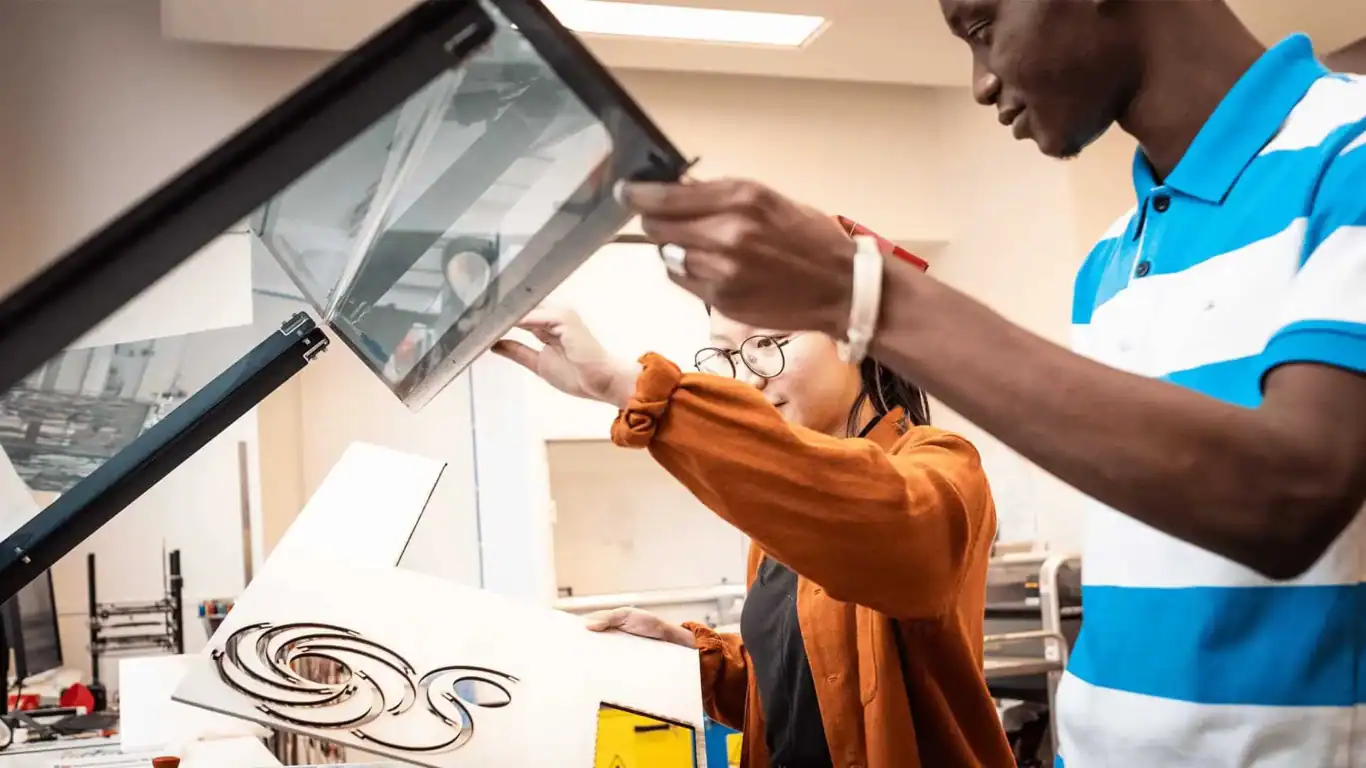
By integrating peer learning, project-based approaches, research-oriented activities, tool prototyping and co-created curricula, the AIRE master's program and the FIRE doctoral school foster students“ autonomy and thinking skills. The AIRE master's program report notes, ”It enables students to master concepts and translate them into prototypes to foster innovation experiments in fields such as virtual reality, robotics, artificial intelligence and machine learning.“ Also, ”The institute's equipped spaces, including videoconferencing systems, VR facilities and a fab lab, further enhance project implementation."
Building a community of solidarity
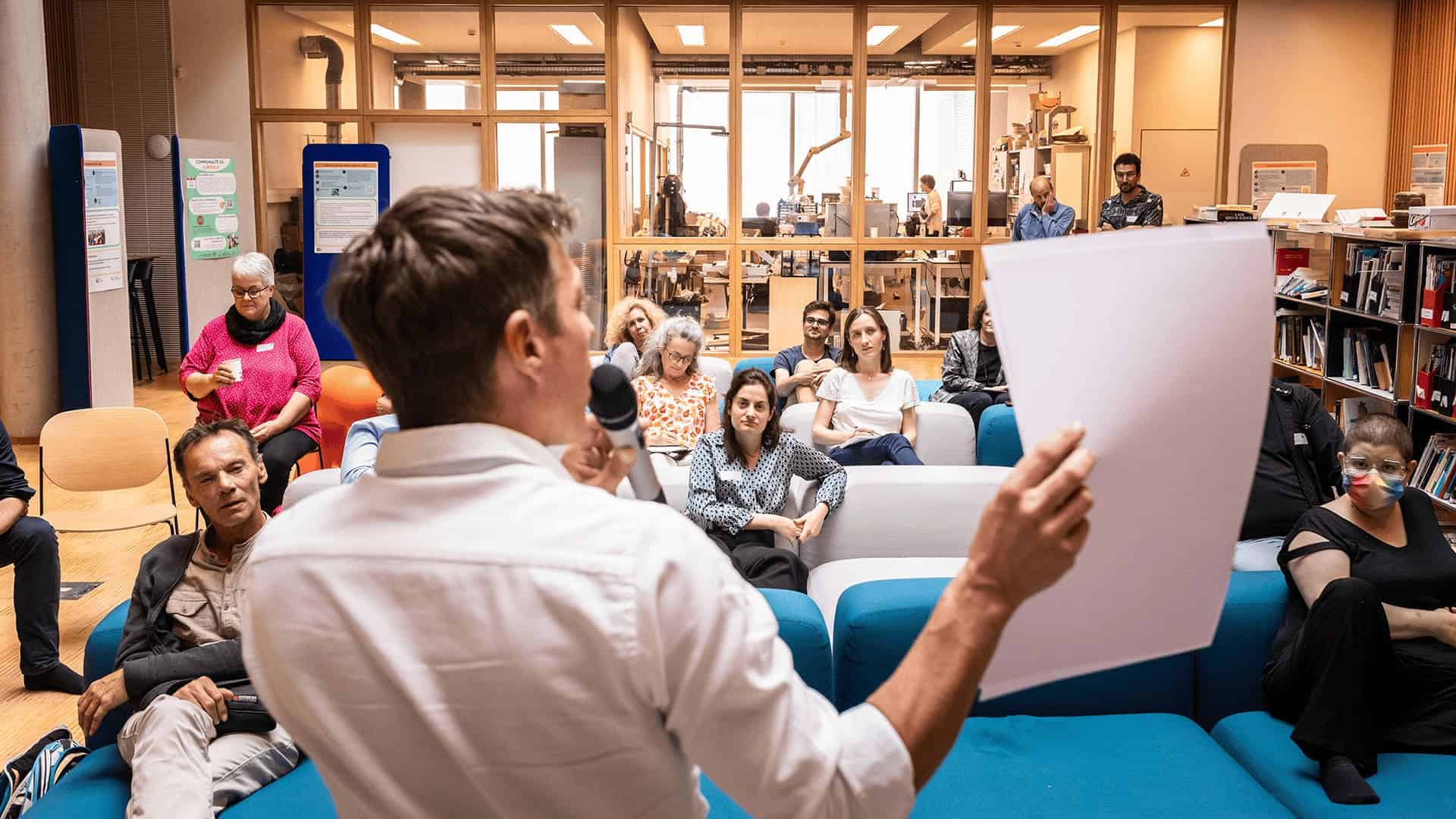
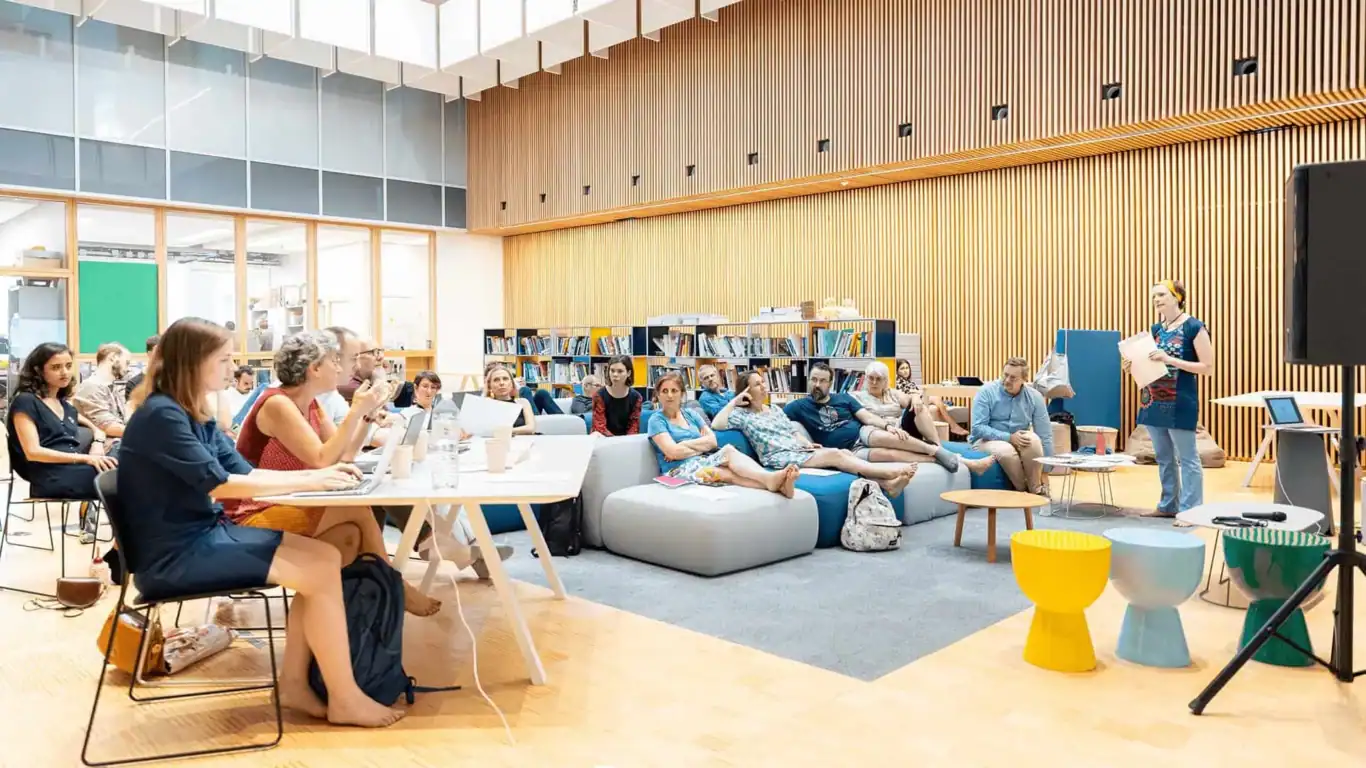
The Rue Charles V sustainable campus in Paris encourages peer-to-peer interaction. The Hcéres notes: “Few doctoral schools have organized dedicated spaces to encourage social links between doctoral students. FIRE is one example. [...] The shared space gives the FIRE doctoral school a clear identity and strengthens the community spirit, even between students from different academic teams.”
Individualized, compassionate support
From application review to post-graduation follow-up, the Institute offers comprehensive support to students. The Hcéres emphasizes FIRE's rigorous selection process, involving international experts and individual feedback to applicants. Doctoral students are closely monitored by individual follow-up committees (CSI), “which include both thesis directors and two mentors with complementary skills, guaranteeing the truly interdisciplinary nature of the research project.”
In the case of the Master's program, the report highlights “the analysis of employability and further study of graduates, based on follow-up surveys of professional integration”.”
The reports also praise the Institute's attention to diversity, inclusion and well-being, particularly for doctoral students: “The doctoral program has developed various support and accommodation measures to take account of the diversity of candidates. Specific provisions have been made, in particular for the validation of prior learning and the welcoming of doctoral students with disabilities. Monitoring committees are also attentive to the well-being of doctoral students [...].”
Internationalization as an asset
Thanks to partnerships with foreign universities such as Tsinghua University in China and/or mobility grants (Bettencourt Schueller Foundation, SMARTS-UP, EURIP), a A growing number of international students join the AIRE master's program each year, with foreign students representing 58% of the M1 cohorts in 2019-2020, 77% in 2020-2021, and 78% in 2021-2022. Courses are taught entirely in English, providing essential language skills for international careers.
Similarly, the FIRE doctoral school facilitates international mobility: “The Learning Planet Institute offers mobility grants to all its doctoral students [...] through various funding programs (IdEx, SMARTS-UP)” and supports “participation in national or international conferences or extended stays in international laboratories”.”
The doctoral school's panel of international experts, the management's close links with the European university project Circle U. on new training methods, and the provision of a “support service for international doctoral students in administrative and logistical matters” are all factors that enhance the attractiveness of these two academic paths.
Preparing for professional realities
Programs emphasize competency-based learning, long-term internships, project portfolios and entrepreneurship training. The AIRE Master's program offers numerous opportunities for internships (21 weeks in M1 and 39 weeks in M2 in research laboratories and companies, or alternating work-study periods) and allocates a significant number of ECTS credits to practical experience and entrepreneurship-related courses (54 credits out of the 120 required to obtain a Master's degree, 14 credits for entrepreneurship and project management).
Partnerships with academic and non-academic organizations reinforce territorial and socio-economic relevance: “The Master AIRE takes into account the social, economic and cultural needs of the region, as evidenced by the participation of social and economic players from the city of Paris on the school's academic board and the involvement of 37 professionals in the training program, contributing a total of 433 hours In addition: “The doctoral program focuses on enhancing the value of a doctorate from both an academic and professional point of view. The FIRE doctoral school establishes close links with non-academic partners who fund a significant number of doctoral scholarships. Socio-economic needs are taken into account in doctoral training in a number of concrete ways: funding of theses by startups, foundations and private companies, presence of socio-professional players on the doctoral school board, distribution of job vacancies by email or on social media, cross-disciplinary training courses, scientific clubs, etc.
This partnership dynamic is also highlighted in the ANR report on the creation of the EURIP Graduate School: “The EURIP program has taken off in a big way, as shown by [...] the partnerships both in France and abroad, and the growing number of mentors from partner institutions who are now part of EURIP. [EURIP also has an entrepreneurship program [...]”.”
Equipping students to become “not the best in the world, but the best for the world” (François Taddei, founder and CEO of Institut Learning Planet) remains the Institute's mission. The remarkable evaluations from Hcéres and ANR validate the team's efforts, support its vision and encourage us to assert that the uniqueness of our programs contributes to building a sustainable world. They inspire us with confidence as we move towards the creation of a global university.
Find out more about our academic programs :
- EURIP Graduate School
- Master of AIRE - Interdisciplinary approaches in research and education
- FIRE doctoral school - Innovation frontiers in research and education